




Washing Machine Capacity Guide: What Size (kg) Do You Really Need?
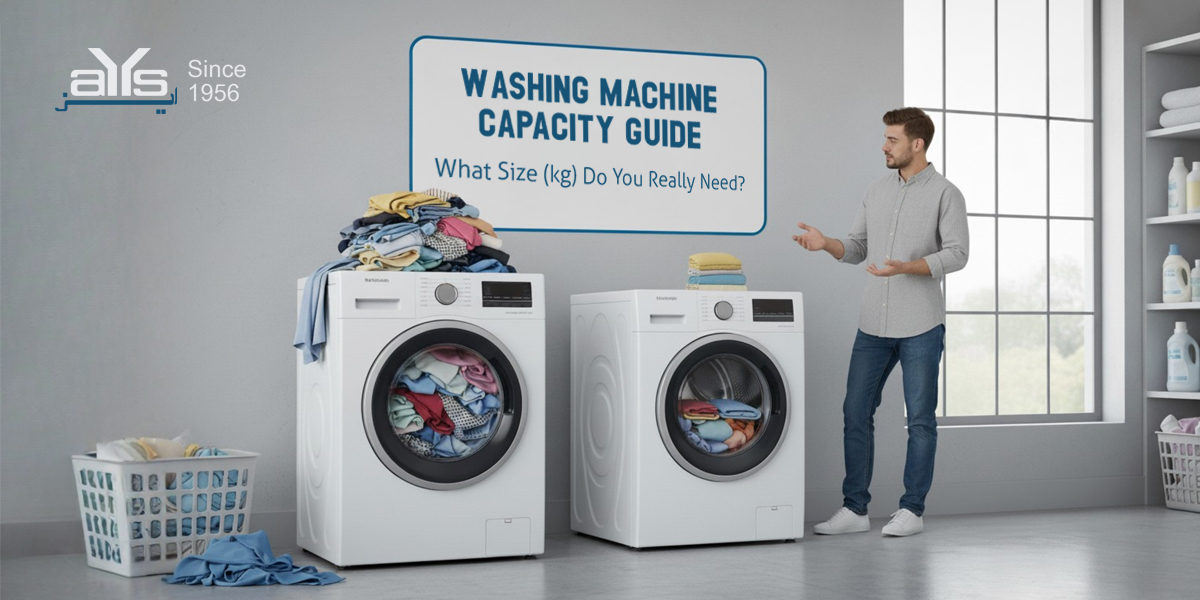
“What size washing machine do I need?” is the second-most-asked question in our showrooms, right after “front load or top load?” — and unlike the first question, this one has a more definite answer if you understand what the kg rating actually means. Choosing the right washing machine capacity in Pakistan matters more than most buyers realise. Most Pakistani buyers either oversize (a 12 kg machine in a 3-person household) and waste money on capacity they never use, or undersize (a 7 kg machine in a joint family of 8) and end up running 2-3 loads daily. Both mistakes are avoidable with five minutes of honest calculation. This guide walks through exactly what washing machine capacity in kg means, what fits inside each size, and what’s right for your specific Pakistani household.
What “kg” actually means on a washing machine
Let’s clear up the confusion first. The kg rating you see on a washing machine — “8 kg,” “11 kg,” “15 kg” — refers to the dry weight of clothes you can wash in a single full-capacity load. It is not:
- The machine’s own weight (washing machines themselves weigh 60-100 kg)
- The amount of water the machine uses (a 9 kg machine uses 50-100 litres depending on type)
- The weight of wet clothes after washing (clothes weigh roughly double when wet)
- The drum’s physical volume
“Dry weight of clothes” means exactly that — if you took your dirty laundry pile and weighed it on a kitchen scale before washing, that’s the number you should compare against the kg rating. A 9 kg machine can wash 9 kg of dry clothes in one cycle. Load more and you’ll get poor cleaning (clothes don’t tumble or scrub properly when overpacked); load less and you waste a cycle’s worth of water and electricity.
What fits inside 1 kg of laundry — Pakistani examples
Most sizing guides give you Western examples (jeans, t-shirts, business shirts) that don’t reflect what Pakistani families actually wash. Here’s the honest breakdown using clothes Pakistani households deal with daily:
| Item | Approx. dry weight | How many fit in 1 kg |
|---|---|---|
| Men’s cotton shalwar kameez (lawn/cotton, summer) | 700-900 g | 1-1.5 sets |
| Women’s cotton shalwar kameez (lawn, summer) | 500-700 g | 1.5-2 sets |
| Heavy embroidered/winter shalwar kameez | 1.0-1.5 kg | 0.7-1 set |
| Dupatta (cotton lawn) | 150-250 g | 4-6 dupattas |
| Cotton t-shirt | 150-200 g | 5-7 t-shirts |
| Men’s western shirt | 200-300 g | 3-5 shirts |
| Jeans (men’s) | 600-800 g | 1-2 pairs |
| Children’s clothes (per item) | 100-300 g | 3-10 items |
| Cotton bed sheet (single) | 500-700 g | 1.5-2 sheets |
| Cotton bed sheet (double) | 800 g-1.2 kg | 1 sheet |
| Pillow cover (cotton) | 100-200 g | 5-10 covers |
| Bath towel (large) | 500-800 g | 1-2 towels |
| Hand towel | 150-250 g | 4-6 towels |
| Cotton blanket (single, summer) | 1.5-2 kg | 0.5-0.7 blankets |
| Quilt (heavy, winter) | 3-5 kg each | 0.2-0.3 quilts |
| Curtains (cotton, per panel) | 500 g-1 kg | 1-2 panels |
The key takeaway: Pakistani clothing weighs significantly more than Western clothing on average. A formal shalwar kameez with dupatta (typical women’s outfit) weighs roughly 800g-1.2kg as a complete set — heavier than a Western shirt-and-pants combo. This is why Western capacity guides systematically undersize for Pakistani families.
Washing machine capacity by family size — the master table
The right washing machine capacity depends on your household size, how often you wash, and how much heavy stuff (blankets, comforters, curtains) you put through the machine. Here’s the honest sizing recommendation for Pakistani households:
| Household | Members | Recommended Capacity | Loads per week |
|---|---|---|---|
| Single occupant / hostel | 1 | 5-6 kg | 1-2 |
| Couple, no children | 2 | 6-7 kg | 2-3 |
| Small family | 3-4 | 7-8 kg | 3-4 |
| Typical Pakistani family | 4-5 | 8-9 kg | 4-5 |
| Family with young children | 4-5 + kids | 9-10 kg | 5-6 (kids = extra laundry) |
| Larger family | 5-7 | 10-11 kg | 5-7 |
| Large household / multi-generation | 6-8 | 11-12 kg | 6-8 |
| Joint family | 8-12 | 14-15 kg | 8-10 |
| Large joint family / mini-commercial | 12+ | 17-25 kg | 10+ |
Note about “loads per week”: These numbers assume you wash full or near-full loads (which is the efficient way). If you wash daily small loads, you’re wasting water and electricity regardless of machine size — fix that habit first, then size the machine.
How to calculate your actual weekly laundry
The family-size table above is a useful starting point, but every household differs. Here’s a more accurate method that takes 10 minutes:
- Collect a typical week’s worth of dirty laundry — everything that would normally go into the machine over 7 days.
- Weigh it on a bathroom scale. Stand on the scale holding the laundry basket, note the total, then subtract your own weight + basket weight. The remainder is your weekly laundry weight in kg.
- Divide by the number of wash cycles you’re willing to run per week. If you’re happy doing 4-5 loads weekly, divide your weekly weight by 4 or 5. The result is the minimum capacity you need per load.
- Add 1-2 kg buffer. You never want to fill the machine to exact rated capacity — it cleans worst at 100% full. Better to run a 9 kg load in a 10 kg machine than a 9 kg load in a 9 kg machine.
Worked example: A family of 5 weighs their weekly laundry at 35 kg. They prefer washing 4 times a week (every other day). That’s 35 ÷ 4 = 8.75 kg per load. Add 1-2 kg buffer → 10-11 kg recommended capacity.
If you don’t want to do this math, the family-size table is accurate for about 80% of Pakistani households. Use the table.
Pakistani factors that affect sizing
Five household-specific factors push your capacity needs up or down from the family-size table:
1. Joint family living
Joint family households (multi-generation, multiple nuclear families under one roof) are common across Pakistan and dramatically change laundry math. A “joint family of 10” doesn’t wash twice the laundry of a “nuclear family of 5” — they wash about 1.6-1.8× because some items (towels, bed sheets, kitchen cloths) scale with shared spaces rather than individual usage. Still, a joint family needs 12-15 kg capacity minimum. Going smaller means running 2-3 loads daily, which wears the machine faster.
2. Blanket and quilt washing
Many Pakistani households wash their cotton blankets, light quilts (rajai), curtains, and bed coverings at home rather than sending to a laundry. These items are heavy — a single winter quilt weighs 3-5 kg, a heavy blanket 2-3 kg. If you regularly wash 3-4 of these per month, your machine needs to handle a single quilt at minimum. Add 2-3 kg to your capacity tier if you plan to wash heavy bedding at home.
3. Wedding and Eid heavy laundry seasons
Pakistani households face periodic laundry spikes — pre-Eid cleaning, post-shaadi guest bedding, Ramadan extra washing for fasting-related clothes. During these peak weeks you may wash double your normal volume. Sizing your machine for the average is fine; the peaks are short enough that running extra loads for a week or two is reasonable.
4. Climate and clothing changes
Pakistani summers in Punjab, Sindh, and southern KPK mean families change clothes once or twice daily due to sweat. This doubles to triples summer laundry volume compared to winter. If you live in a hot climate and don’t want to run double loads in summer, consider sizing up 1-2 kg from the family-size table.
5. Children’s clothes math
Each young child (under 8) effectively adds 30-40% more laundry than an adult equivalent — children’s clothes are individually small but they generate many more dirty items per day (multiple outfit changes, school uniforms, sports kit, frequent stains). A family of 4 with 2 young children washes roughly the same volume as a family of 5 adults. Use the higher tier on the family-size table.
Oversizing vs undersizing — both are real mistakes
The Pakistani retail conversation tends to push “go bigger” because the upsell is profitable, but oversizing is a genuine mistake too. Both errors waste money:
Undersizing consequences
- More loads per week — a family that needs 9 kg but buys 7 kg ends up running 7-8 loads/week instead of 4-5. Over 10 years that’s 3,000+ extra cycles of wear.
- Water and electricity inefficiency — small loads still need minimum water levels and fixed motor startup energy. Two small loads use ~80% more water than one full load of the same total weight.
- Premature compressor/motor wear — more starts/stops mean more compressor stress. Machines rated for 8-10 years die in 5-6.
- Time waste — laundry days take 2× longer because you’re running multiple cycles.
- Can’t wash heavy items — a 7 kg machine can’t fit a winter quilt, period.
Oversizing consequences
- Higher upfront cost — going from 9 kg to 12 kg costs Rs. 8,000-15,000 more, sometimes more for premium brands.
- Wasted water on partial loads — modern automatic machines have load-sensing fill but still use 20-30% more water than the minimum needed.
- Wasted electricity — large drums need more energy to rotate even when partially loaded.
- Poor cleaning at low load levels — counterintuitively, putting a 2 kg load in a 12 kg machine often cleans worse than putting it in a 9 kg machine because the small load doesn’t get the right amount of mechanical action.
- Larger footprint — bigger machines take more utility room space, which matters in apartments and compact Pakistani urban housing.
The sweet spot is matching your average load (not your peak load) to about 70-80% of the machine’s rated capacity. That gives you headroom for occasional heavy loads while running efficiently on typical loads.
How capacity differs between front load and top load
One nuance worth understanding: the same kg rating can mean slightly different things between front load and top load machines.
Top load machines measure capacity by what physically fits inside the drum without compressing too tightly. An 8 kg top load can usually accommodate slightly more bulky items (heavy blankets, multiple bed sheets) because you can layer them in vertically.
Front load machines measure capacity by what can tumble through the drum effectively. An 8 kg front load actually washes 8 kg of clothes more thoroughly than an 8 kg top load (better cleaning, fewer creases), but bulky items like winter quilts that fit in a top load may not fit in a front load of the same rating because the horizontal drum has less vertical “stuffing” room.
For Pakistani households that regularly wash large bedding items, top load gives slightly more usable capacity per kg of rating. For families washing primarily clothes, front load uses its kg rating more efficiently.
If you’re still deciding between front load and top load, see our complete front load vs top load comparison.
Our top picks by capacity tier
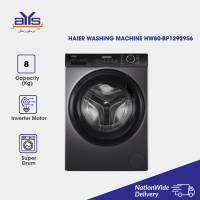
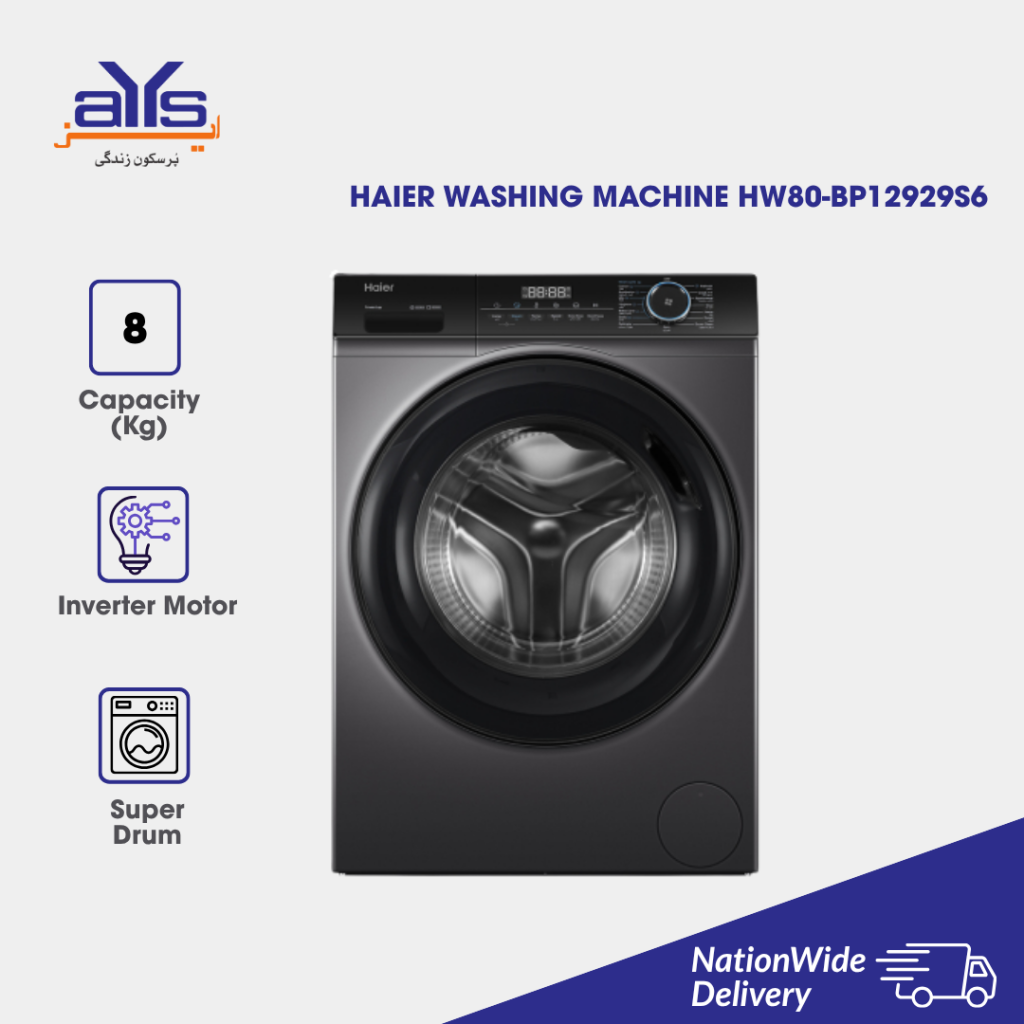
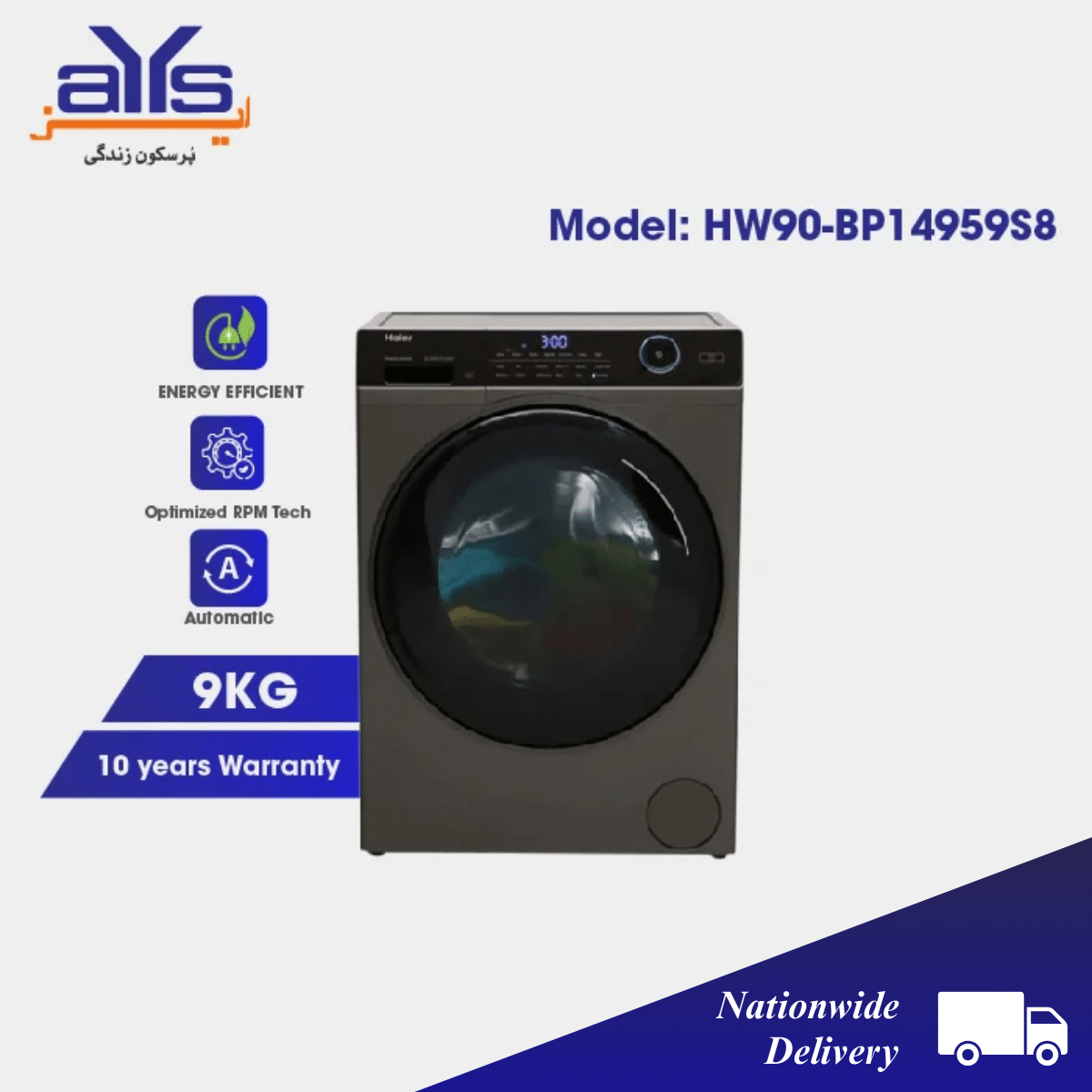
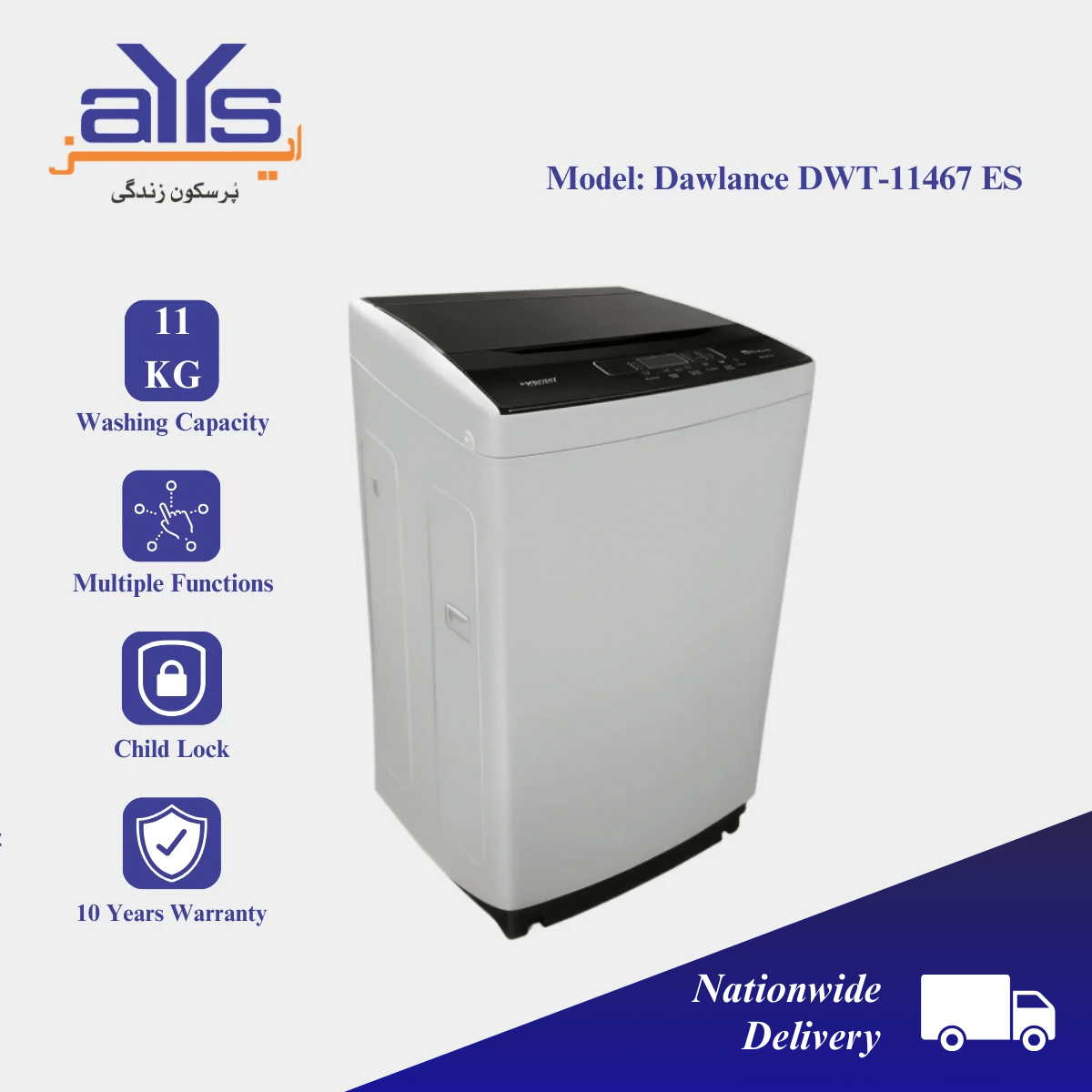
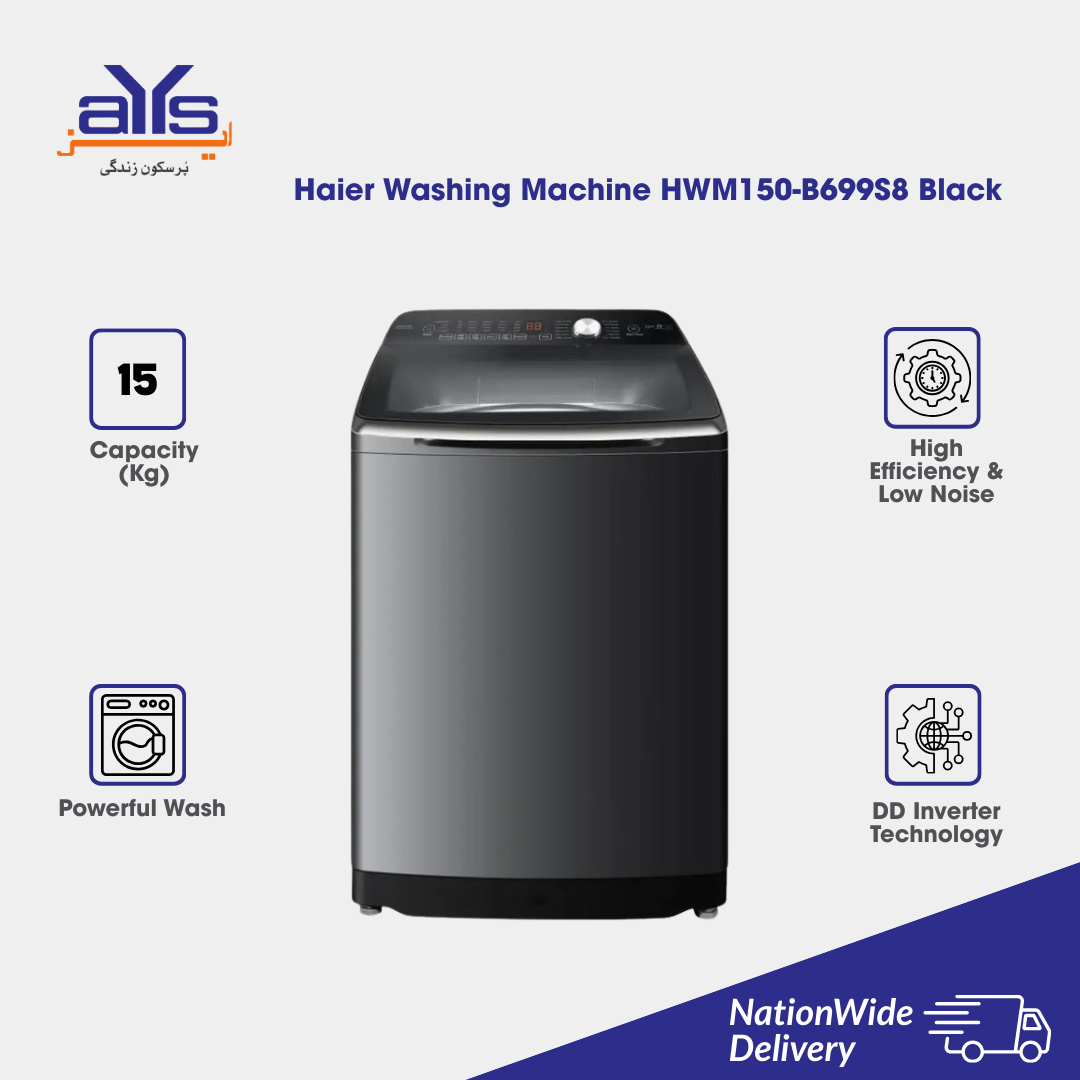
From the 110 washing machines currently in stock at AYS Online, here’s one recommended pick at each major capacity tier. Daily updated prices.





Frequently asked questions
How do I choose the right washing machine capacity in Pakistan?
Match washing machine capacity to your weekly laundry weight and family size. Couples need 6-7 kg, typical Pakistani families of 4-5 need 8-9 kg, families with young children need 9-10 kg, large families of 6-8 need 10-12 kg, and joint families need 14 kg+. Add 2 kg if you regularly wash heavy bedding like quilts or blankets at home.
What does kg mean on a washing machine?
The kg rating refers to the dry weight of clothes you can load in a single wash cycle. An 8 kg machine washes 8 kg of dry clothes per cycle. It does NOT mean the machine’s weight, the water it uses, or the wet weight of clothes.
What size washing machine do I need for a family of 4 in Pakistan?
For a typical Pakistani family of 4-5 adults, 8-9 kg capacity is the sweet spot. If you have young children, size up to 9-10 kg because children generate 30-40% more laundry per person than adults. If you regularly wash blankets or quilts at home, add another 1-2 kg.
What size washing machine is best for a joint family?
Joint families of 8-12 members need 14-15 kg capacity at minimum. Anything smaller means running 2-3 loads daily, which wears the machine faster and wastes time. The Dawlance DWT-14470 ES (14 kg) and Haier HWM150 DD Inverter (15 kg) are the practical picks. For families of 12+ members, consider the 17 kg or larger flagships.
Can a washing machine wash a quilt or heavy blanket?
Yes, if it has enough capacity. A single winter quilt weighs 3-5 kg, so you need at least an 8-9 kg machine to wash one quilt alone (leaving headroom for proper tumbling). For two quilts at once, you need 14-15 kg capacity. Light cotton blankets (2 kg) can fit in 7-8 kg machines. Top load machines are slightly better for bulky bedding than front loads of the same kg rating.
Is it better to buy a bigger washing machine than I need?
A small buffer (1-2 kg over your typical load) is smart — gives headroom for peak weeks and runs more efficiently. But oversizing by more than 2 kg wastes money on upfront cost, water on partial loads, and electricity on rotating a larger drum unnecessarily. The sweet spot is matching your average load to about 70-80% of the machine’s rated capacity.
Is a 7 kg washing machine enough for a family?
7 kg is adequate for couples or families of 3 without children. For typical Pakistani families of 4-5, 7 kg means running 5-6 loads per week and struggling with bedding items. Step up to 8-9 kg for typical family use.
Why does my washing machine clean poorly when I overload it?
Overloading prevents proper tumbling (front load) or agitator action (top load). Clothes need space to move through the water and detergent — packed too tightly, they don’t get cleaned evenly. The kg rating is the maximum dry weight; aim for 70-80% of rated capacity for best cleaning, not 100%.
Do front load and top load machines have the same capacity ratings?
The kg rating is measured the same way (dry weight of clothes), but the practical capacity differs slightly. Top loads can fit bulkier items (winter quilts, multiple bed sheets) at the same kg rating because items can stack vertically. Front loads wash their rated kg more effectively but accommodate bulky items less efficiently. For clothing-heavy laundry, front load is more usable; for bedding-heavy laundry, top load has a small edge.
How heavy is a Pakistani shalwar kameez set?
A summer cotton (lawn) shalwar kameez with dupatta weighs roughly 800g-1.2kg as a complete set. A winter shalwar kameez (heavier fabric, embroidered) weighs 1.5-2 kg. This is heavier than a typical Western shirt-and-pants set, which is why Western capacity guides often undersize for Pakistani households.
How do I know exactly how much my weekly laundry weighs?
Collect a typical week’s worth of dirty clothes in a basket. Step on a bathroom scale holding the basket, note the reading, then weigh yourself alone and subtract. The difference is your weekly laundry weight. Divide by your preferred number of weekly cycles (usually 3-5) to get per-load capacity needed. Add 1-2 kg buffer.
What is the most popular washing machine size in Pakistan?
9 kg is the most popular size in Pakistan, with 15 models at this capacity in our catalogue. It hits the sweet spot for the typical Pakistani family of 4-5. 8 kg is the second-most popular (17 models). Together they account for nearly a third of all washing machines sold.
Should I buy a smaller machine if I live in a small apartment?
Don’t undersize purely for space — the daily laundry burden of an undersized machine is worse than the spatial cost. Modern 8-10 kg machines fit standard Pakistani apartment utility areas. If space is severely constrained, consider a front load (smaller footprint than top load of the same capacity, can stack a dryer on top) rather than dropping to a smaller-capacity top load.
Can I buy a washing machine on EMI in Pakistan?
Yes — at AYS Online every washing machine is available on 0% down payment EMI through Bank Alfalah, JS Bank, and MCB Bank credit and debit cards. Installment plans 3-12 months, fully automated at checkout. For larger-capacity machines at Rs. 80K+, 6 or 12 month EMI keeps monthly outlay comfortable.
The bottom line
Pick capacity based on what your household actually washes weekly, not on what looks impressive in the showroom. The simple summary:
- Couples / small households (1-3 people): 6-7 kg. The Dawlance DWF-7310 Front Load or any 7-8 kg top load.
- Typical Pakistani family (4-5): 8-9 kg. The Dawlance DWT255ES (8 kg) or Haier HWM 90-826S5 (9 kg).
- Family with young children: 9-10 kg. The Dawlance DWT 1006 (10 kg).
- Large families (6-8): 11-12 kg. The Dawlance DWT-11467 (11 kg).
- Joint families (8-12): 14-15 kg. The Dawlance DWT-14470 (14 kg) or Haier HWM150 (15 kg).
- Add 2 kg to your tier if you regularly wash quilts, blankets, or heavy bedding at home.
Every model in this guide is in stock today at AYS Online, with daily updated pricing, official manufacturer warranty, 0% down payment EMI from Bank Alfalah, JS Bank, and MCB, and free Peshawar delivery. Browse all 110 washing machine models →
Still undecided between front load and top load? Read our complete front load vs top load comparison. Looking for our top picks across all capacities? See Best Washing Machine in Pakistan.
 Dawlance AC
 EcoStar AC
 General AC
 Gree AC
 Haier AC
 Homage AC
 Kenwood AC
 Midea AC
 Orient AC
 Panasonic AC
 Samsung AC