



Front Load vs. Top Load Washers: A 2026 Complete Guide

The front load vs top load washing machine question is the single most-debated appliance decision in Pakistani households — and it has been for the better part of a decade. The difference between front loading and top loading washing machines comes down to mechanical design, water use, clothes care, cost, and ergonomics — and Pakistani buyers face this choice in a context international guides don’t address. Walk into any extended family WhatsApp group and you’ll find aunties arguing the case for top load (“we’ve used them for 40 years, why change?”), while younger family members champion front load (“less water, better cleaning, more modern”). Both sides have points. The honest answer depends on your water situation, your budget, your family size, your electricity reliability, and how much you bend down before your back complains. We’ve sold both types for 70 years at AYS Online. Here’s the breakdown that cuts through the noise.
How front load and top load washing machines actually work
To compare front loading and top loading washing machines fairly, you need to understand what’s different mechanically.
Top load washing machines have a vertical drum with an agitator or pulsator in the centre. Clothes sit in water (the drum fills up like a bathtub), and the agitator moves them around to scrub. You load clothes from the top — open the lid, drop them in. This is the design that dominated Pakistani households for 40+ years. Modern automatic top load machines added water-level sensors, multiple programs, and spin cycles, but the basic mechanism is unchanged.
Front load washing machines have a horizontal drum with paddles inside. Clothes tumble through a small pool of water at the bottom — the drum rotation lifts them up, then drops them through the water repeatedly. You load from the front through a glass door. This is the design used in commercial laundromats and European homes for decades, and it’s gained Pakistani market share rapidly since 2018.
Two completely different mechanical philosophies — and the differences cascade into every aspect of how the machines perform.
Front load vs top load washing machine: side-by-side comparison
| Factor | Front Load | Top Load (Automatic) |
|---|---|---|
| Starting price (Pakistan) | Rs. 122,000+ | Rs. 50,000+ |
| Water per wash | ~45-65 litres | ~90-130 litres |
| Electricity per wash | ~0.8-1.2 kWh | ~1.0-1.5 kWh |
| Cleaning performance | Better (tumbling action) | Good (agitator action) |
| Cycle time | 60-120 minutes | 40-60 minutes |
| Clothes care | Gentler — clothes last longer | Harder on clothes — agitator wears fabric faster |
| Spin speed | 1200-1600 RPM (drier clothes) | 700-900 RPM (wetter clothes) |
| Loading position | Bending down (front-bottom) | Standing up (top) |
| Footprint | Smaller; can stack a dryer on top | Larger; cannot stack |
| Installation | Needs level floor, proper drainage | Less demanding |
| Repair complexity | More complex (sealed drum, electronics) | Simpler |
| Expected lifespan | 10-15 years with proper care | 8-12 years |
| Mould risk | Higher — rubber door gasket needs cleaning | Lower — drum dries between uses |
| Best for | Apartments, families that wash often, water-conscious buyers | Budget buyers, older users, joint families with large daily loads |
Water consumption — the biggest difference
This is the factor that matters most in Pakistan, where municipal water supply is unreliable, tanker water costs real money in Karachi and parts of Lahore, and Karachi specifically faces year-round water shortages.
Top load machines fill the drum. They need enough water to submerge the clothes. A typical 8 kg top load uses 90-130 litres per full-capacity wash cycle. Half-loads use proportionally less, but even small loads need a minimum water level to function.
Front load machines tumble through a small pool. The clothes don’t need to be submerged — gravity drops them through 5-10 cm of water at the bottom of the drum repeatedly. A typical 8 kg front load uses 45-65 litres per cycle. That’s roughly half the water of a comparable top load.
Over a year of typical washing (5 loads per week × 52 weeks = 260 loads), the difference adds up:
- Top load annual water use: ~23,000-34,000 litres per year
- Front load annual water use: ~12,000-17,000 litres per year
- Savings: ~11,000-17,000 litres per year
Cleaning performance — which actually cleans better
This question gets heated on Pakistani family WhatsApp groups, and we’ll be direct: front load cleans modestly better on most loads, top load cleans modestly better on the very dirtiest loads. Here’s why.
Front load’s tumbling action repeatedly lifts and drops clothes through detergent-rich water, working the solution through the fabric. The longer cycle times (60-120 minutes versus top load’s 40-60 minutes) give detergent more time to react with stains. Most independent testing — both international and the limited Pakistani consumer testing that exists — shows front loads cleaning 5-15% better on average loads (regular family laundry, school uniforms, daily wear).
Top load’s agitator action is more aggressive on individual items. For very heavily soiled clothes — workshop overalls, heavily-stained children’s clothes, fabric covered in cooking oil — the mechanical scrubbing of an agitator can outperform tumbling. Most Pakistani households don’t wash these loads regularly, but if you do (mechanic family, farm household, very young children), top load has an edge on this specific use case.
One important nuance: front load machines need front-load detergent (low-suds formula). Using regular powder detergent in a front load creates excessive foam, can damage the machine, and triggers extra rinse cycles that waste water and time. Front load detergent is now widely available in Pakistan but costs slightly more.
Cost: upfront price vs 10-year total ownership
The upfront price gap between front load and top load is significant in Pakistan:
- Cheapest reliable top load automatic: Rs. 50,000 (Haier 8.5 kg)
- Cheapest reliable front load: Rs. 122,000 (Dawlance 6.5 kg)
- Price gap at entry level: Rs. 72,000 (140% more expensive)
At first glance, this seems decisive — top load wins on upfront cost by a wide margin. But the total 10-year cost of ownership tells a different story. Here’s a rough comparison for typical family use (5 loads per week):
| Cost category (10 years) | Front Load | Top Load |
|---|---|---|
| Machine purchase | Rs. 150,000 | Rs. 70,000 |
| Electricity (260 loads/year × 10 years) | Rs. 78,000 | Rs. 104,000 |
| Water (if buying tanker) | Rs. 26,000 | Rs. 65,000 |
| Detergent (FL uses less but FL-specific costs more) | Rs. 35,000 | Rs. 30,000 |
| Clothes replacement (FL is gentler) | Rs. 0 baseline | Rs. 25,000-50,000 extra |
| Repairs (average) | Rs. 15,000 | Rs. 10,000 |
| 10-year total (rough estimate) | ~Rs. 304,000 | ~Rs. 304,000-329,000 |
The numbers are estimates and depend heavily on your local water cost, electricity tariff, washing frequency, and family clothing habits. The takeaway: in Karachi with tanker water, front load wins on total cost over 10 years. In Lahore or Islamabad with cheap municipal water, top load wins on total cost. In most other Pakistani cities, they end up roughly equal.
Clothes care and gentleness
Top load machines use an agitator (centre column with vanes) or pulsator to physically move clothes through the water. This mechanical action — clothes rubbing against each other and against the agitator — gradually wears fabric. Cotton t-shirts lose colour faster, dupattas develop pulls, jeans fade more aggressively.
Front load machines tumble clothes gently. The motion is similar to handwashing — lifting, dropping, soaking — rather than scrubbing. Independent textile testing shows front-load-washed clothes retaining colour, shape, and integrity 20-40% longer than agitator-washed equivalents.
For households where lawn suits, embroidered shalwar kameez, silk dupattas, and other delicate Pakistani fabrics are common, this difference matters. Over a 10-year machine life, the cumulative clothes-replacement savings can be Rs. 25,000-50,000 — particularly for households with women’s formal wear that wears out from agitator action.
Cycle speed and convenience
Top load wins decisively on cycle speed. A standard cotton wash on a top load completes in 40-60 minutes. The same load on a front load takes 60-120 minutes — sometimes longer if you select the deep clean or heavy soil setting.
Why does front load take longer? The water-efficient tumbling action requires more cycles to achieve the same cleaning. Heated wash options (which front loads typically have, top loads typically don’t) add additional time for water heating.
For households with high daily laundry volume — joint families with multiple children, families where everyone changes clothes twice daily in summer — top load’s faster cycles mean you can complete more loads in the same time window. For 1-2 daily loads (typical 4-5 person family), the speed difference matters less, but it’s still real.
Spin speed is reversed: front loads spin at 1200-1600 RPM, top loads at 700-900 RPM. Front-load-spun clothes come out significantly drier — 5-10% additional dryness — which means faster drying on the line or in a dryer, partially offsetting the longer wash time.
Space, ergonomics, and installation
Footprint: A typical 8 kg front load machine measures about 60 × 60 × 85 cm. A typical 8 kg top load measures 55 × 55 × 95 cm. The footprints are similar, but front loads have one important advantage: you can stack a dryer on top of them to double your laundry capacity in the same floor space. Top loads can’t be stacked because you load from the top.
For apartment dwellers, modern Pakistani urban housing with smaller utility areas, or households planning to add a dryer later, front load’s stacking option is a meaningful advantage.
Ergonomics: This is the single biggest practical complaint about front loads. Loading and unloading requires bending down to the front-bottom of the machine. For older household members, anyone with knee or back problems, or pregnant family members, this becomes a daily annoyance. Top loads, where you simply lift the lid and drop clothes in standing upright, are significantly more comfortable for elderly users.
This single factor — household composition — is why many Pakistani families with elderly parents living at home choose top load despite knowing front load is “technically better.”
Installation: Front loads need a perfectly level floor (an out-of-level machine vibrates aggressively at high spin speed and can “walk” across the floor), proper inlet and drain plumbing, and ideally a stable concrete base rather than tile-over-sand. Top loads are more forgiving — slight floor irregularities don’t affect them.
Reliability and lifespan in Pakistani conditions
Both machine types can last 10-15 years with proper care, but the failure modes differ:
Top loads typically fail in this order: pulsator/agitator wear (cheap to replace, Rs. 3,000-6,000), drum bearings (moderate repair, Rs. 8,000-15,000), control board (replacement Rs. 10,000-20,000). The mechanical simplicity makes them generally easier and cheaper to repair, and parts are widely available across Pakistan.
Front loads failure modes: rubber door gasket (Rs. 4,000-8,000 replacement), shock absorbers/dampeners (Rs. 6,000-12,000), drain pump (Rs. 5,000-10,000), control board (Rs. 15,000-30,000), and the dreaded main bearing failure (Rs. 25,000-50,000 if it happens). When front loads fail, the failures are more expensive — but they fail less frequently with proper care.
The single biggest reliability factor for either machine type in Pakistan is voltage stability. WAPDA voltage fluctuations damage washing machine control boards more than any other factor. A Rs. 5,000-10,000 voltage stabilizer is essential for either machine type — not optional.
Pakistani context: load shedding, water, voltage
Several Pakistani realities affect this choice in ways the international comparison guides don’t capture:
Load shedding mid-cycle. Front loads with cycle times of 60-120 minutes are more likely to be interrupted by load shedding than top loads with 40-60 minute cycles. When power returns, both machines resume — but front loads with sealed doors can’t be opened mid-cycle, which can be frustrating if you needed to add or remove a forgotten item. Top loads can be opened mid-cycle (just press pause and lift the lid).
Water pressure issues. Pakistani municipal water pressure is often inconsistent. Front loads need reasonable inlet pressure to fill the drum properly within the cycle’s expected fill time. Low pressure causes the machine to extend or fault. Top loads, which fill more slowly to begin with, are more tolerant of low pressure.
Tanker water cost. If you depend on tanker water (Karachi, parts of interior Sindh and southern Punjab), front load’s 50% water reduction is huge financially. If you have unlimited municipal water (most of Lahore, Islamabad, smaller cities), this advantage matters less.
Voltage instability. Both machine types need voltage stabilizers. Front loads with more electronic components arguably suffer more catastrophic damage from voltage spikes, but neither type survives long-term abuse from raw WAPDA voltage.
Climate. Pakistani summer heat and humidity create mould risk in front load rubber door gaskets. Owners must wipe the gasket dry after each use and leave the door slightly open between uses. Top loads avoid this problem because the drum dries between uses.
Which is right for your household?
The front loading vs top loading washing machine decision really comes down to your household’s specific situation. Use this checklist:
Choose front load if you…
- Have a budget of Rs. 122,000+
- Live in Karachi or any city where you pay for tanker water
- Have an apartment or compact utility space (and might add a stacked dryer)
- Wash delicate Pakistani fabrics (lawn, silk, embroidered shalwar kameez) regularly
- Value water conservation
- Don’t have elderly or back-pain household members who’ll do the laundry
- Want the longest possible appliance lifespan with proper care
- Plan to keep this machine for 10+ years
Choose top load if you…
- Have a budget under Rs. 90,000
- Have unlimited municipal water (Lahore, Islamabad, smaller cities)
- Have elderly household members or anyone with back/knee issues who does laundry
- Need faster cycle times (joint family with high daily volume)
- Wash heavily-soiled clothes regularly (mechanic family, farm work, young children)
- Prefer simpler appliances with cheaper repairs
- Live somewhere with unstable water pressure
- Are buying your first automatic washing machine and want to avoid front load learning curve (FL detergent, gasket cleaning, etc.)
Our top 5 front load washing machine picks in Pakistan
Of 13 front load machines currently in stock at AYS Online, these are the 5 worth your money in 2026. Daily updated prices.
| Product | Price (Today) | Capacity | Warranty | EMI from | |
|---|---|---|---|---|---|
 Dawlance Front-Load Automatic Washing Machine DWF-7310 Inv (6.5 Kg)
|
₨122,000 | 6.5 kg | 1 Year | Rs. 10,167/mo | Buy Now |
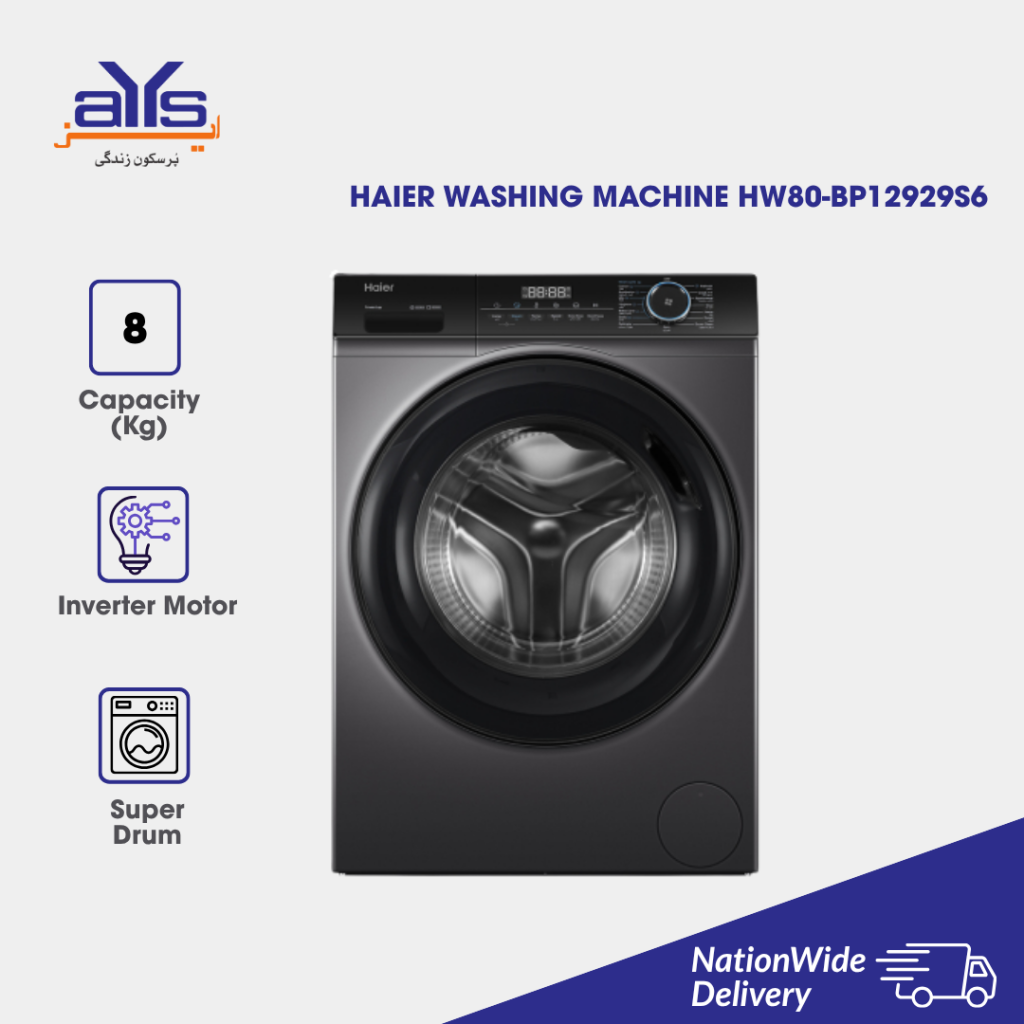
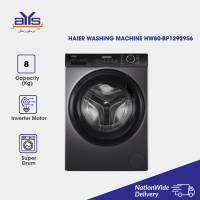 Haier Front Load Washing Machine HW80-BP12929S6 (8 Kg)
|
₨150,000 | 8 kg | 1 Year, 10 Years | Rs. 12,500/mo | Buy Now |
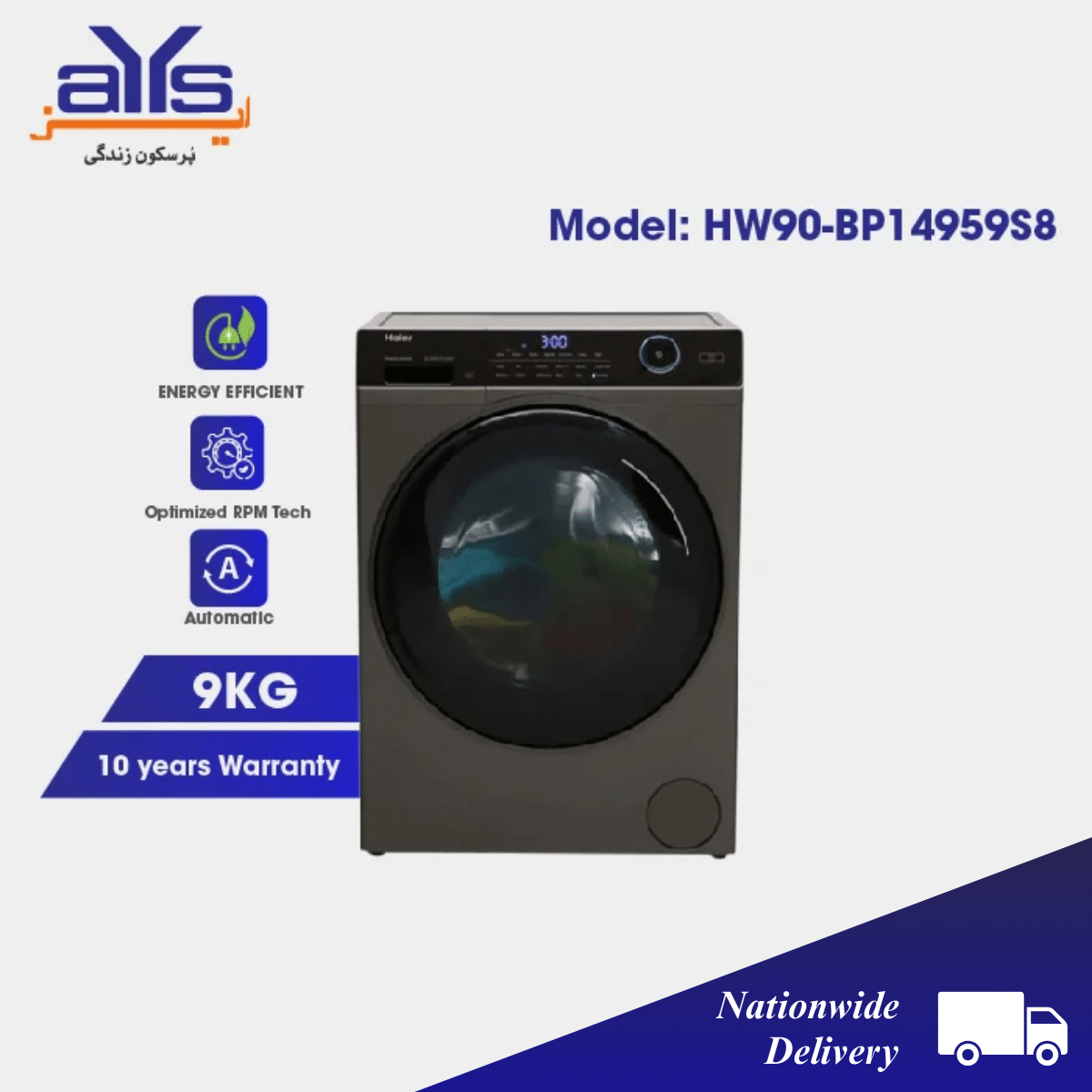 Haier Automatic Front Load Washing Machine HW90-BP14959S8 (9 Kg, Super Inverter)
|
₨165,000 | 9 kg | 1 Year, 10 Years | Rs. 13,750/mo | Buy Now |
 Haier Front Load Automatic Washing Machine HW-100BP14929S6 (10 Kg, Inverter)
|
₨175,000 | 10 kg | 1 Year, 10 Years | Rs. 14,584/mo | Buy Now |
 Samsung WD70TA046BX Front Load Washer Dryer (7+5 Kg, Inverter)
|
₨250,000 | 7 kg | 1 Year, 20 Years | Rs. 20,834/mo | View |
Our top 5 top load washing machine picks in Pakistan
Of 42 automatic top load machines in stock, these are the 5 we recommend. All are fully automatic (single tub, no manual transfer between wash and spin).
| Product | Price (Today) | Capacity | Warranty | EMI from | |
|---|---|---|---|---|---|
 Haier Top Load Washing Machine HWM85-1269S6 (8.5 Kg)
|
₨50,000 | 8.5 kg | 1 Year, 10 Years | Rs. 4,167/mo | View |
 Dawlance DWT255ES Automatic Washing Machine (8 Kg)
|
₨58,000 | 8 kg | 1 Year, 10 Years | Rs. 4,834/mo | Buy Now |
 Haier HWM 90-826S5 Automatic Washing Machine (9 Kg)
|
₨69,500 | 9 kg | 1 Year, 10 Years | Rs. 5,792/mo | Buy Now |
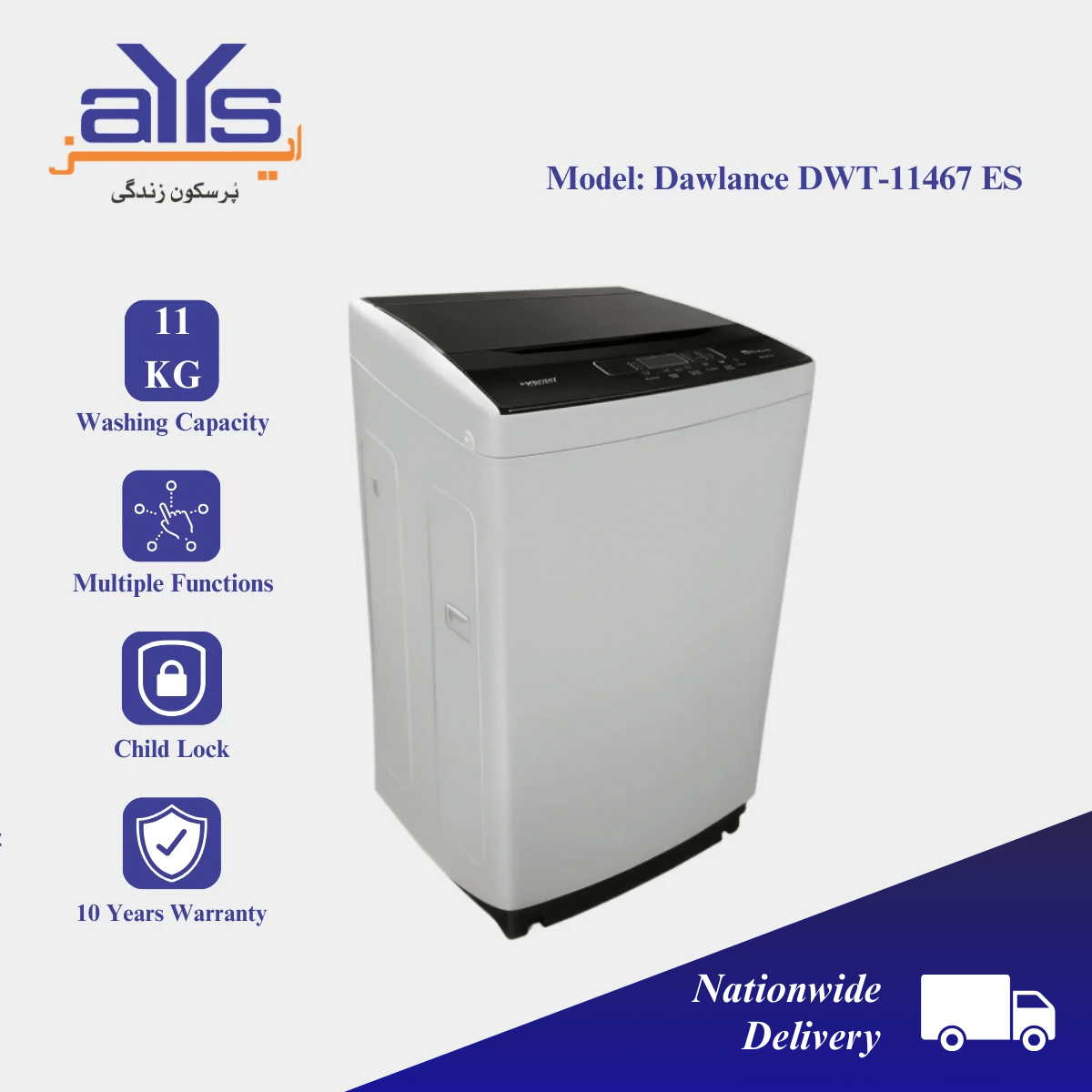 Dawlance DWT-11467 ES Automatic Washing Machine & Dryer (11 Kg)
|
₨69,500 | 11 kg | 1 Year, 10 Years | Rs. 5,792/mo | View |
 Dawlance Top Load Washing Machine DWT 1006 (10 Programs, Mystic Grey)
|
₨80,000 | 10 kg | 1 Year, 10 Years | Rs. 6,667/mo | Buy Now |


Frequently asked questions
Front load or top load — which is better in Pakistan?
Neither is universally “better” — it depends on your household. Front load wins on water efficiency (saves 40-50% water), clothes care, energy use, and apartment-friendly footprint, but costs Rs. 70,000+ more upfront and requires bending to load. Top load wins on price (starts at Rs. 50,000 vs Rs. 122,000), cycle speed, ergonomics for elderly users, and tolerance for unstable water pressure. Choose based on your specific water situation, household composition, and budget.
Does a front load washing machine really save water in Pakistan?
Yes — significantly. A typical 8 kg front load uses 45-65 litres per cycle versus 90-130 litres for a comparable top load. Over a year of typical family washing (260 loads), that’s 11,000-17,000 litres saved. For Karachi households buying tanker water at Rs. 2,500-4,500 per 1,000 gallons, this translates to Rs. 8,000-15,000 in direct annual water savings.
Why are front load washing machines so expensive in Pakistan?
Three reasons: front loads use more complex sealed-drum design with high-precision bearings and shock absorbers, they require more sophisticated electronic control boards and motors (typically inverter motors), and they’re imported or assembled with higher proportion of imported components than basic top loads. The technology cost gap will continue to narrow but unlikely to fully close.
Can I use regular detergent in a front load washing machine?
No. Front loads require front-load-specific detergent (low-suds formula). Regular detergent creates excessive foam, can damage the machine over time, and triggers extra rinse cycles that waste water. Front load detergent is widely available in Pakistan (Ariel Matic, Surf Excel Matic, Bonus Matic) and costs slightly more than regular detergent.
Does a top load washing machine damage clothes faster than front load?
Yes, modestly. Top load’s agitator mechanically scrubs clothes, causing faster fabric wear, fading, and pulls — particularly noticeable on lawn suits, silk dupattas, and embroidered fabrics. Front load’s tumbling action is gentler. Over 10 years of typical use, the cumulative clothes-replacement savings of front load can be Rs. 25,000-50,000 for households with delicate Pakistani fabrics.
Can elderly people use a front load washing machine?
Possible but uncomfortable. Front loads require bending to the front-bottom of the machine for loading and unloading — a daily issue for anyone with back, knee, or hip problems. If your household’s primary laundry-doer is elderly or has mobility issues, top load is significantly more comfortable and may be the right choice despite the technical disadvantages.
Why does my front load smell musty?
Mould or mildew in the rubber door gasket — a common front load issue in Pakistani humid climates. Prevention: wipe the gasket dry after every wash, leave the door slightly open between uses to allow ventilation, run a monthly hot-water empty cycle with vinegar to sanitize the drum. If smell persists, deep-clean the gasket or replace it (Rs. 4,000-8,000).
Which is more reliable in Pakistan — front load or top load?
Top loads typically have simpler mechanisms and cheaper repairs. Front loads have more complex electronics and bearings but fail less frequently with proper care. Voltage stability is the biggest reliability factor for either type — a Rs. 5,000-10,000 voltage stabilizer is essential. Brand matters more than type: Dawlance and Haier have the strongest service networks for both.
Can I stack a dryer on top of a front load washing machine?
Yes — this is one of front load’s significant advantages. A matching dryer can be stacked directly on top using a manufacturer-approved stacking kit, doubling your laundry capacity in the same floor space. Top loads cannot be stacked because the loading door is on top. For apartments and compact utility areas in modern Pakistani urban homes, this is a major front load benefit.
How long do front load and top load washing machines last in Pakistan?
With proper care (voltage stabilizer, regular cleaning, correct detergent, gasket maintenance for front loads), front load: 10-15 years. Top load: 8-12 years. Voltage instability is the single biggest factor reducing washing machine lifespan in Pakistan regardless of type — protect your machine with a quality stabilizer.
Can I buy a washing machine on EMI in Pakistan?
Yes — at AYS Online every washing machine, front load and top load, is available on 0% down payment EMI through Bank Alfalah, JS Bank, and MCB Bank credit and debit cards. Installment plans 3-12 months, fully automated at checkout. For front loads at Rs. 122K+, 6 or 12 month EMI keeps monthly outlay manageable.
Should I buy a washer + dryer combo or separate machines?
Combo machines (Samsung WD70TA046BX in our front load picks, Dawlance DWT-11467 in top load picks) save space and money versus buying separately, but the dryer function is less powerful than dedicated dryers. For typical Pakistani households where line-drying is the default in summer, combo machines provide useful backup for monsoon and winter weeks. For households planning heavy dryer use, separate machines work better.
Does AYS Online deliver washing machines nationwide?
Yes — both front load and top load machines deliver across Pakistan. Free delivery in Peshawar, standard rates elsewhere. Cash on Delivery nationwide. 2-5 working days. Front loads particularly require proper installation by certified technicians for level positioning and plumbing connections.
The bottom line
If you’ve read this far, you have what you need to decide. The simple version:
- Budget under Rs. 90K: Top load. Dawlance DWT255ES (Rs. 58,000) is our overall top load pick.
- Budget Rs. 122K-175K, water-conscious household: Front load. Haier HW80-BP12929S6 (Rs. 150,000) is our family-size front load pick.
- Budget Rs. 200K+, want washer + dryer in one: Samsung WD70TA046BX (Rs. 223,000).
- Elderly household member doing laundry: Top load regardless of budget. The bending issue with front loads becomes a daily quality-of-life problem.
- Apartment or compact space, plan to stack a dryer: Front load. Top loads cannot be stacked.
Every model in this guide is in stock today at AYS Online, with daily updated pricing, official manufacturer warranty, 0% down payment EMI from Bank Alfalah, JS Bank, and MCB, and free Peshawar delivery. Browse all 110 washing machine models → or jump to automatic washing machines for the full front load and top load automatic selection.
 Dawlance AC
 EcoStar AC
 General AC
 Gree AC
 Haier AC
 Homage AC
 Kenwood AC
 Midea AC
 Orient AC
 Panasonic AC
 Samsung AC